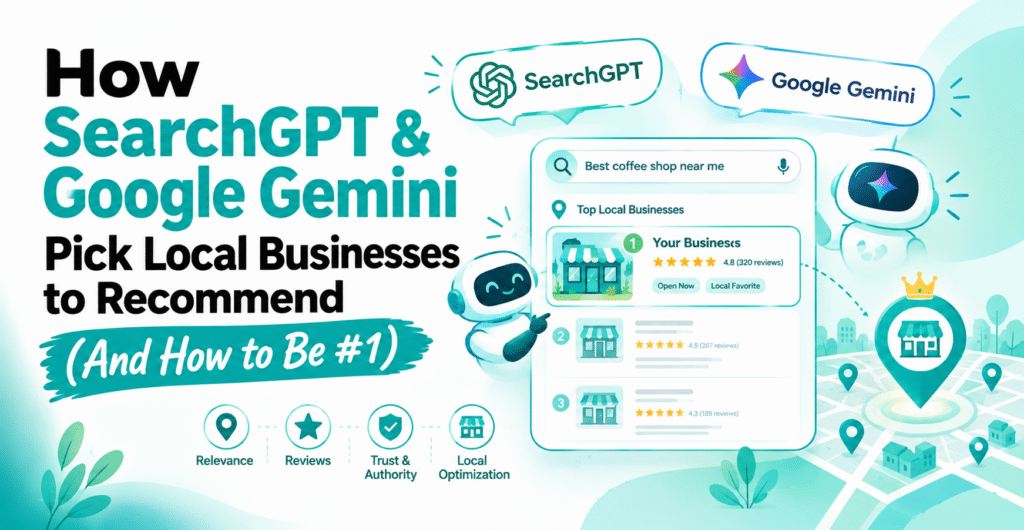
Imagine a scenario playing out thousands of times every day across the United States: A homeowner’s primary water line bursts in the middle of the night, or a luxury SUV owner searches for high-end paint protection, or an industrial building’s climate control system fails.
Instead of opening a traditional search browser, typing three keywords, and sifting through ten blue links or sponsored ads, the consumer opens SearchGPT or speaks directly into Google Gemini:
“Gemini, find me a licensed, insured HVAC contractor near me with verified 24/7 emergency service, transparent diagnostic pricing, and strong recent customer sentiment for fast response times.”
In less than three seconds, the AI engine evaluates thousands of data points across the web, filters out low-confidence options, and responds with a single, highly detailed, conversational answer: It recommends two specific local businesses and explicitly explains why they are the safest, most qualified choices.
If your business is recommended, you receive a direct, pre-sold, high-intent client. If your business is passed over, you don’t just lose a single search click you become entirely invisible to the growing market of consumers who rely on AI to make buying decisions.
How do OpenAI’s SearchGPT and Google’s Gemini choose which local businesses to recommend? What algorithms, entity signals, and sentiment vectors determine who gets recommended and who gets ignored?
This comprehensive guide breaks down the underlying mechanics of AI local selection models and outlines an actionable strategy to position your local business as the #1 AI-recommended brand in your city.
The Core Architecture: How SearchGPT & Gemini Differ from Traditional Search
To rank inside conversational AI engines, you must first understand how their underlying technology differs from traditional keyword-based search algorithms.
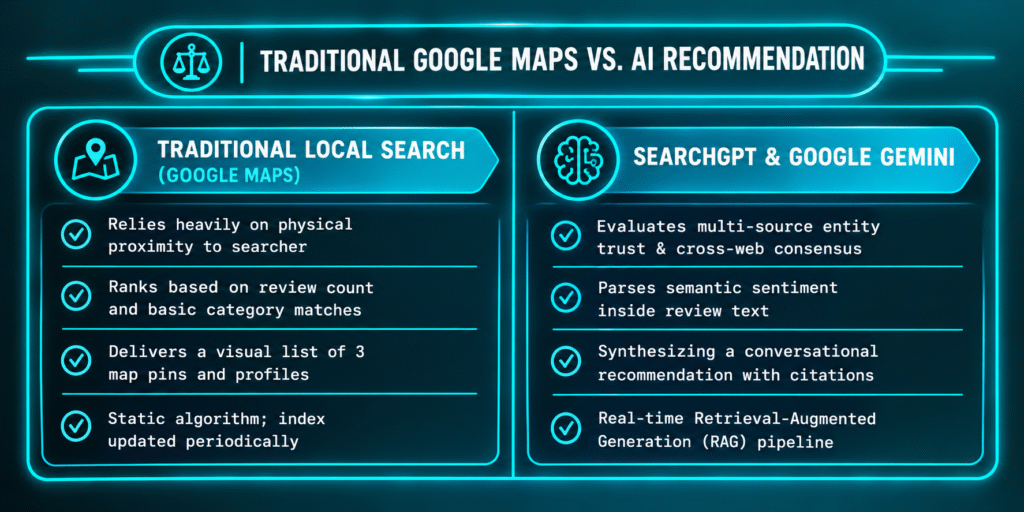
The RAG Pipeline (Retrieval-Augmented Generation)
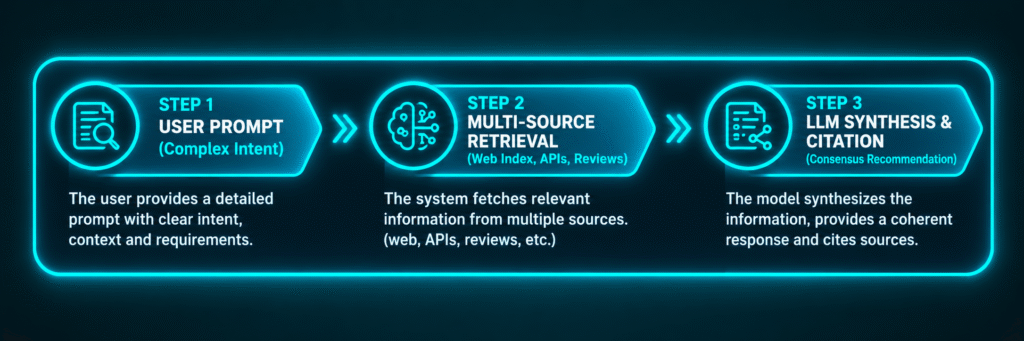
SearchGPT and Google Gemini do not simply query a database of static web pages. They utilize a three-stage Retrieval-Augmented Generation (RAG) pipeline:
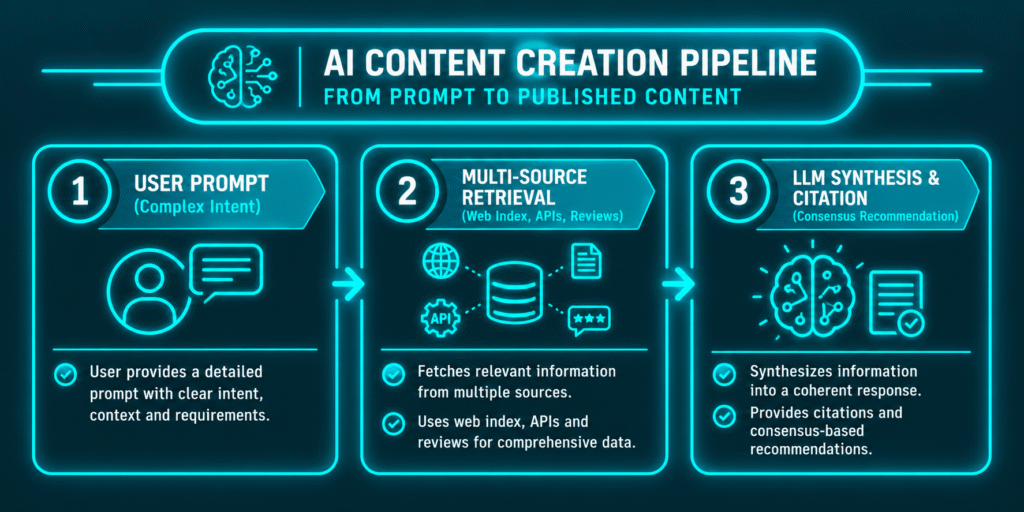
- Prompt Parsing & Constraint Identification: The AI breaks down the user’s conversational prompt into explicit operational constraints (e.g., Service Type = Emergency Plumbing, Location = Austin TX, Requirement = Transparent Pricing, Trust Signal = Verified Insurance).
- Multi-Source Web Retrieval: The engine queries real-time web indexes (Bing API for SearchGPT; Google Knowledge Graph & Local Index for Gemini) along with third-party review databases, social platforms, and structured directory data.
- LLM Synthesis & Confidence Scoring: The Large Language Model (LLM) evaluates the retrieved candidate businesses. It assigns a Confidence Score based on cross-platform data consistency, customer sentiment, and entity verification before generating a natural-language recommendation.
The 4 Filters AI Engines Use to Pick Local Winners
When SearchGPT or Gemini selects a local business to recommend, it passes candidates through four distinct algorithmic filters:
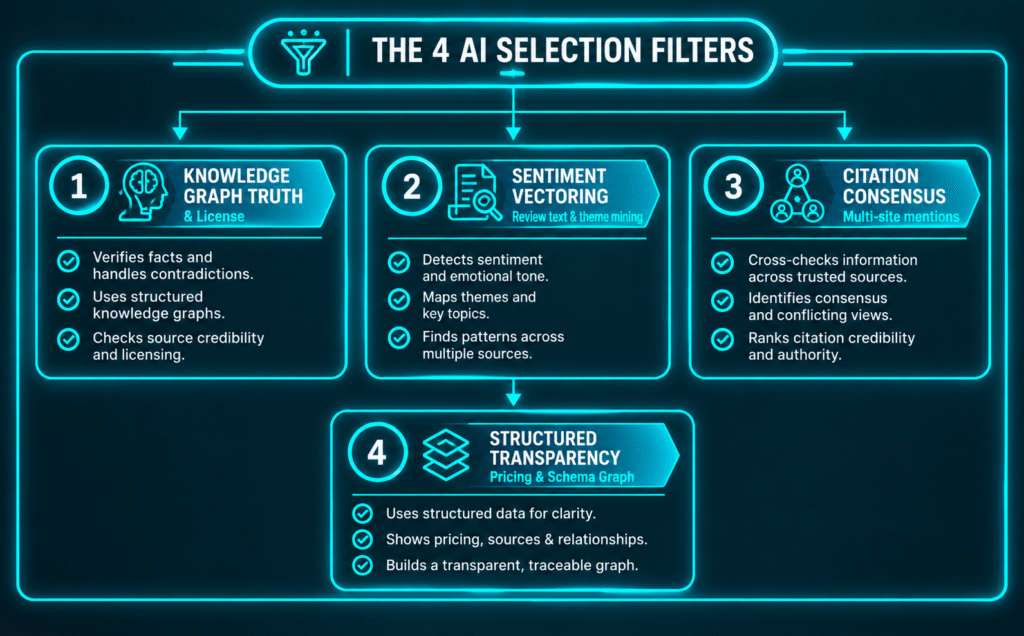
1. Knowledge Graph Verification (Entity Confidence)
Before an AI engine risks its own credibility by recommending a local service provider, it verifies that the business is legitimate, active, and fully operational.
It cross-references your Name, Address, Phone Number (NAP), trade license numbers, physical location coordinates, and operational hours across primary databases:
- Google Gemini: Cross-checks Google Business Profile, Google Maps, state licensing boards, and local Chamber of Commerce rosters.
- SearchGPT: Cross-checks Bing Places, Apple Maps, Yelp, TripAdvisor, and official corporate registration filings.
If an AI detects conflicting addresses, broken phone numbers, or inconsistent business names across these core sources, its Entity Confidence Score drops, and the business is excluded from the recommendation output.
2. Semantic Sentiment Vectoring (Deep Review Analysis)
Unlike traditional search engines that primarily evaluate star ratings and total review volume, LLMs process the actual text of customer reviews using Semantic Sentiment Vectoring.
The AI converts thousands of customer review sentences into high-dimensional vector embeddings, identifying recurring operational themes:
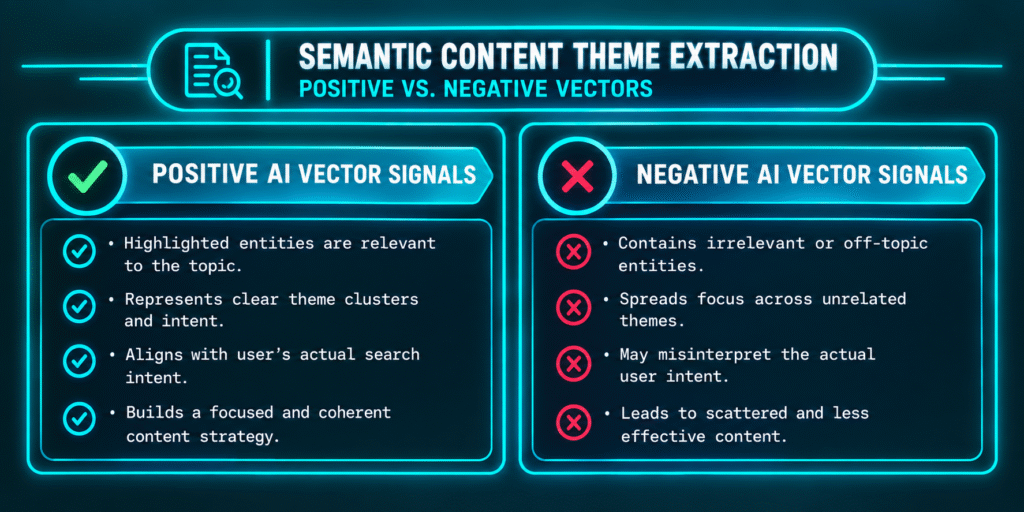
If a prompt asks for a “reliable contractor with transparent pricing,” the AI scans review vectors for phrases related to upfront estimates and fair billing, shortlisting businesses whose actual customer feedback aligns with those traits.
3. Multi-Platform Citation Consensus
SearchGPT and Gemini operate on Web Consensus. They do not rely on a single profile or website.
If a business is listed on Google Business Profile but has no presence on Yelp, the Better Business Bureau (BBB), Angi, Nextdoor, or local news outlets, the AI treats it as a weak entity. Conversely, a business cited consistently across multiple independent platforms receives a higher authority score.
4. Structured Data & Pricing Transparency
Generative AI models prefer structured, machine-readable facts over vague marketing claims. Websites that publish explicit service offerings, clear starting price ranges, step-by-step processes, and comprehensive JSON-LD Schema markup provide the structured data AI models need to generate confident recommendations.
💡 Is SearchGPT or Gemini Recommending Your Competitors?
AI search engines are already guiding high-ticket local clients in your city. Find out how AI engines evaluate your business and claim your position at the top of conversational search.
5-Step Action Blueprint: How to Be #1 on SearchGPT & Gemini
To transform your local plumbing, HVAC, auto detailing, electrical, or contracting company into the #1 AI-recommended business in your region, follow this execution blueprint:
Step 1: Unify Your Digital Entity Footprint
Audit your operational data across the entire web. Ensure your legal business name, local phone number, street address, and opening hours are identical across:
- Google Business Profile & Apple Maps
- Bing Places & Facebook Local
- Yelp, BBB, Angi, & YellowPages
- State business registries & trade license databases
Step 2: Implement Nested LocalBusiness Schema Architecture
Upgrade your website’s technical code to include deeply nested JSON-LD Schema graphs that explicitly outline your operations for AI crawlers:
{
“@context”: “https://schema.org”,
“@graph”: [
{
“@type”: “AutoRepair”,
“@id”: “https://codixmedia.com/#business”,
“name”: “Your Local Service Business”,
“url”: “https://codixmedia.com”,
“telephone”: “+1-000-000-0000”,
“priceRange”: “$$”,
“address”: {
“@type”: “PostalAddress”,
“streetAddress”: “123 Main St”,
“addressLocality”: “Your City”,
“addressRegion”: “ST”,
“postalCode”: “00000”,
“addressCountry”: “US”
},
“hasOfferCatalog”: {
“@type”: “OfferCatalog”,
“name”: “Core Services”,
“itemListElement”: [
{
“@type”: “Offer”,
“itemOffered”: {
“@type”: “Service”,
“name”: “Emergency Brake Repair”,
“description”: “Same-day hydraulic brake inspection, pad replacement, and rotor resurfacing.”
}
}
]
}
}
]
}
Step 3: Implement Sentiment-Focused Review Generation
When asking satisfied clients for feedback, guide them to mention specific details about their experience.
Prompt Example for Customers:
“If you enjoyed our service today, please consider mentioning the specific job we completed (e.g., tankless water heater installation / ceramic coating) and how our pricing or response time met your expectations!”
This approach naturally generates keyword-rich, sentiment-dense review text that AI models prioritize during synthesis.
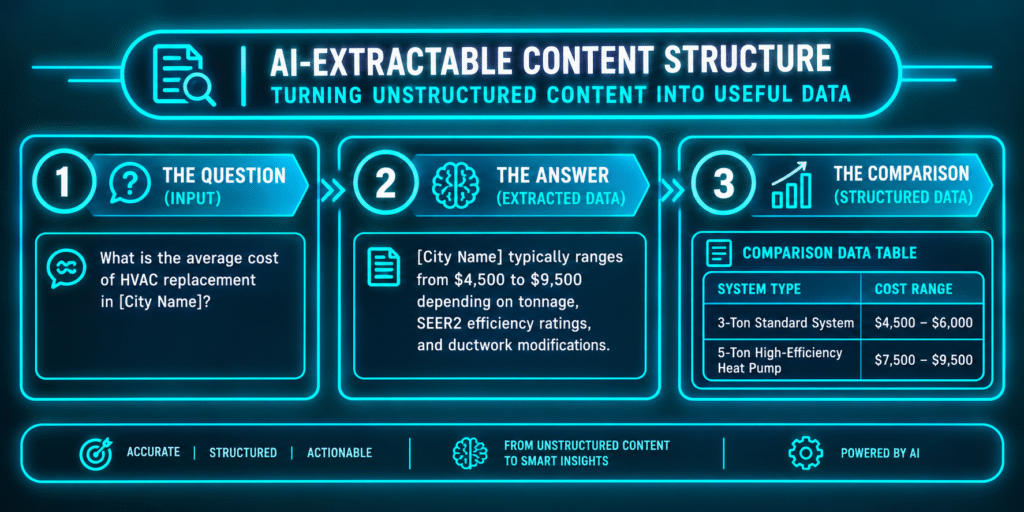
Step 4: Publish “AI-Extractable” Conversational Content
Structure your service pages using conversational Q&A formats that directly mirror complex AI prompts:
Step 5: Build Local Press and Unlinked Brand Mentions
Submit press releases covering community events, local charity sponsorships, trade certifications, or business expansions. AI models crawl local news publications and digital press to verify your standing as an established brand in your city.
📊 Want an Integrated AI Search System Built for Your Business?
Don’t let your competitors capture modern AI search traffic. Let our team upgrade your digital presence with a comprehensive AI and search optimization strategy.
👉 Schedule Your AI Search Visibility Strategy Call
How CodixMedia Drives Local AI Search Dominance
At CodixMedia, we help local service providers, contractors, automotive specialists, and home service companies adapt to changing search trends. We don’t rely on outdated, low-cost marketing tactics that risk your online reputation.
Our complete growth solutions include:
- AI Search Optimization (GEO & AEO): Advanced Entity Graph building, sentiment optimization, and SearchGPT/Gemini positioning.
- Google Business Profile Mastery: Specialized Google Business Profile Management Services to maintain Top 3 Map Pack rankings.
- High-Converting Web Development: Fast, Schema-powered Website Development Services designed for both human visitors and AI search engines.
- Targeted Search Advertising: High-ROI PPC Campaign Management to capture immediate customer demand across all platforms.
Ready to Be the #1 AI-Recommended Business in Your City?
Stop relying on outdated marketing blueprints. Partner with an agency that knows how to position your brand for long-term growth across Google Maps, SearchGPT, Gemini, and conversational voice engines.
👉 Schedule Your Strategy Call with CodixMedia Today or review our real-world client case studies on the CodixMedia Portfolio.