For any local service business in the United States, your website is not a passive digital brochure it is your primary digital salesperson.
Whether you run an auto repair and detailing shop, operate an emergency plumbing service, manage an HVAC installation company, or lead an electrical contracting crew, your marketing funnel ultimately funnels prospective customers to a single destination: your website.
You might be spending thousands of dollars every month on Google Ads, local SEO, social media reels, or Google Business Profile optimization. But if visitors land on your site and bounce within five seconds without picking up the phone or submitting a quote request, your digital marketing budget is evaporating.
Traffic without conversion is just vanity.
Many small business owners make the mistake of treating a website redesign as purely an artistic or aesthetic project. In reality, a modern website must be engineered as a conversion engine. If your site architecture fails to guide a visitor seamlessly from arrival to a booked service call, your design is actively costing you revenue every single day.
This definitive guide breaks down the 7 unmistakable warning signs that your website is leaking high-value leads, the psychology behind visitor friction, and an actionable blueprint for executing a website redesign for lead generation that turns casual visitors into paying clients.
The Core Problem: Why Most Local Business Websites Fail to Convert
Before looking at individual design flaws, it helps to understand how the modern service consumer behaves online.
When a pipe bursts in a homeowner’s basement, an air conditioning unit fails during a heatwave, or a car owner notices brake issues on the highway, they are not browsing the web for leisurely entertainment. They are in an acute problem-solving state.
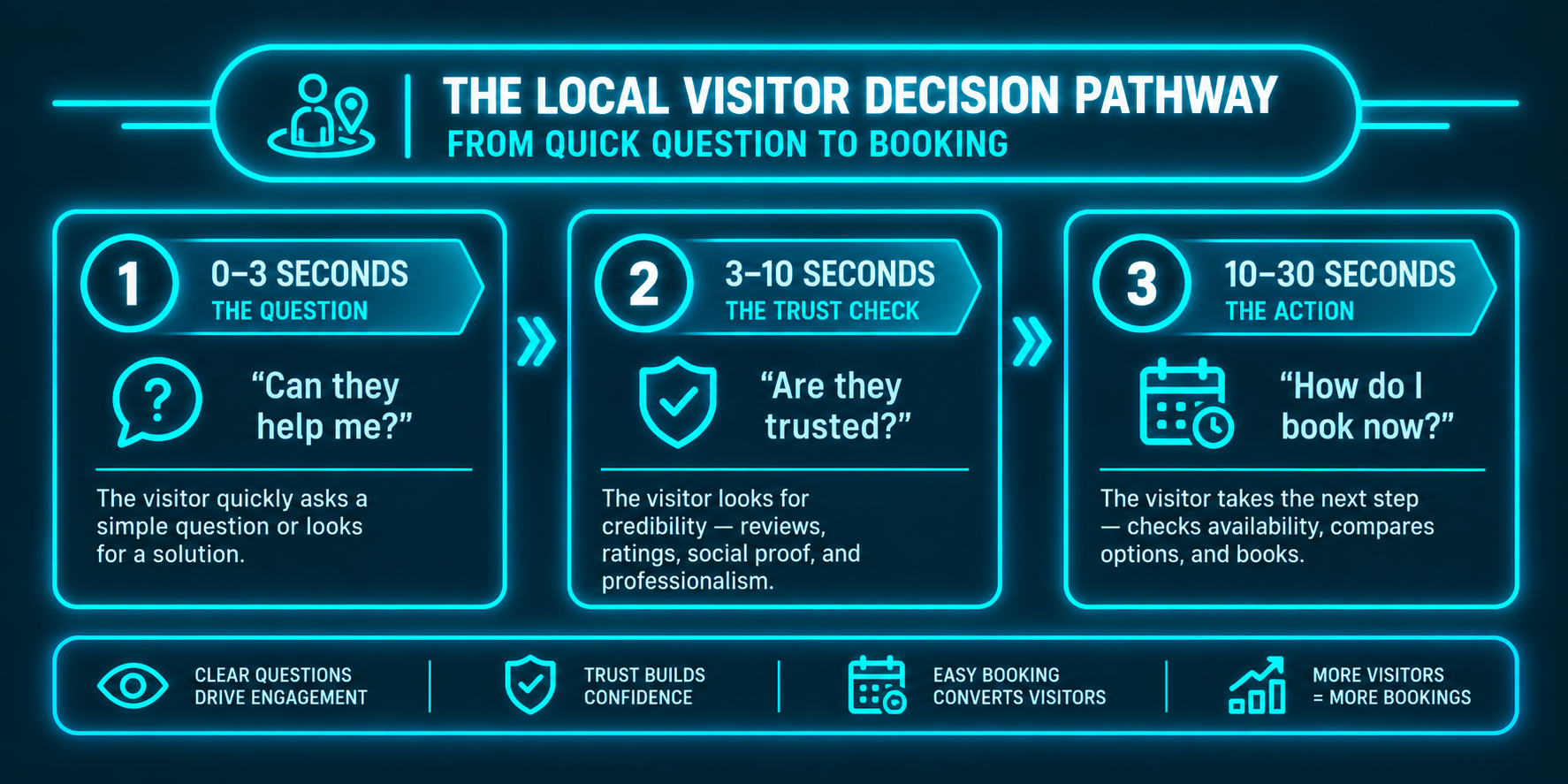
A customer landing on your site asks three immediate subconscious questions within seconds:
- Relevance: Does this company solve my exact problem in my specific town or city?
- Trust & Credibility: Are they licensed, insured, reviewed, and reputable?
- Friction: Can I contact them or see transparent pricing without hassle?
If your website fails to answer all three questions within the first 10 seconds, that visitor hits the “Back” button and clicks on your nearest competitor.
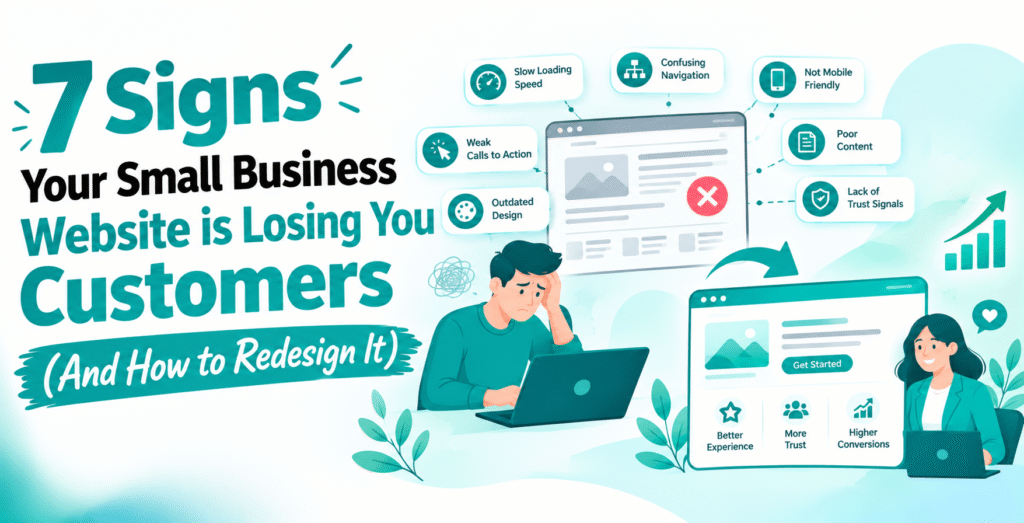
7 Signs Your Small Business Website Is Losing You Customers
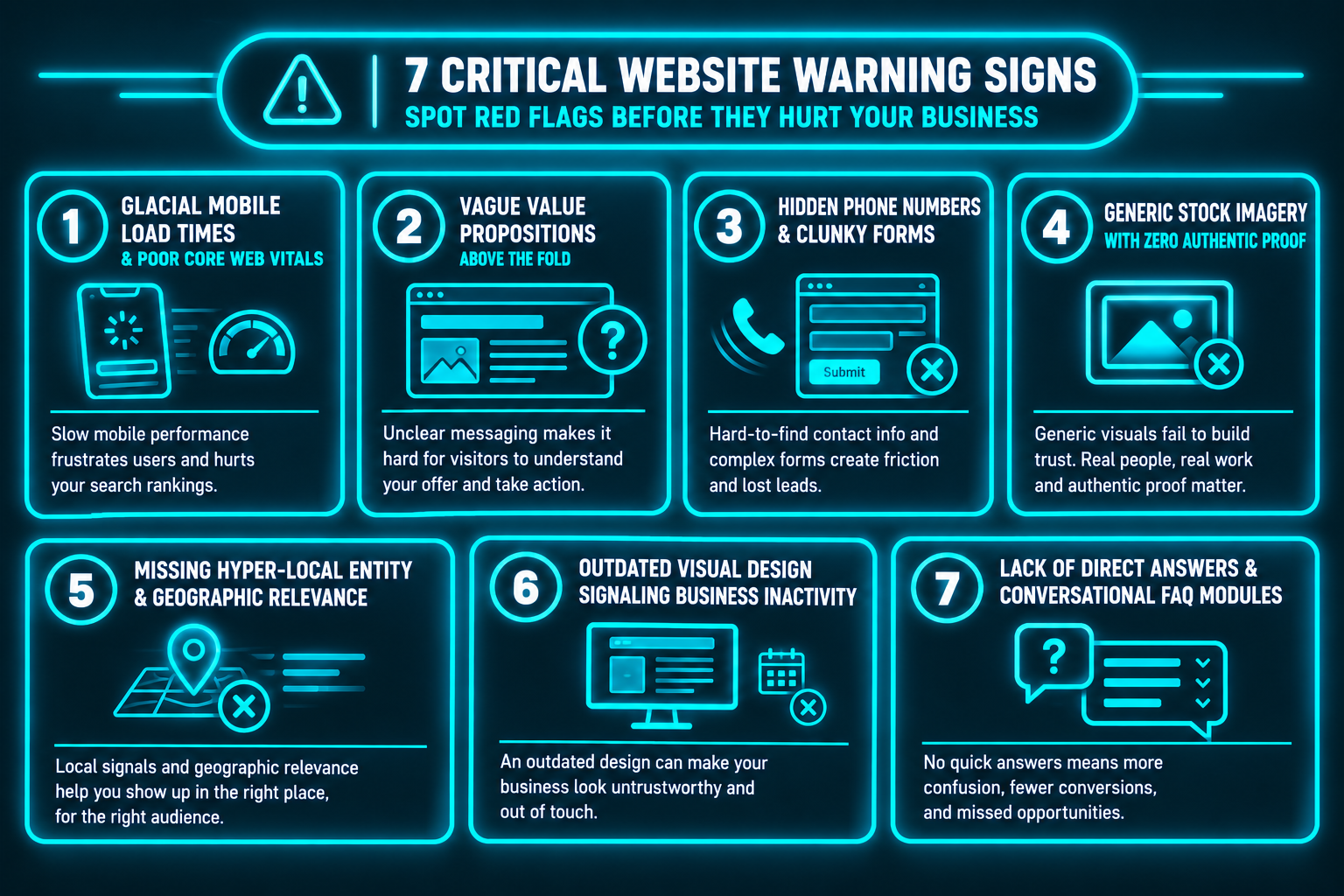
Sign 1: Glacial Mobile Page Speed (The 3-Second Drop-Off)
Over 75% of local service queries occur on mobile devices. If your website takes more than 3 seconds to load on a 4G/5G mobile connection, over half of your potential visitors will abandon the page before reading a single word.
Many legacy WordPress websites are bloated with uncompressed 10MB images, dozens of conflicting plugins, heavy slider animations, and sluggish hosting servers. Google’s algorithms directly incorporate Core Web Vitals (Largest Contentful Paint, Interaction to Next Paint, Cumulative Layout Shift) into organic search rankings. A slow website does not just hurt user experience; it drags down your search rankings across the board.
Sign 2: A Vague Value Proposition “Above the Fold”
“Above the fold” refers to the content a visitor sees on their screen before scrolling down.
A common design mistake is filling the hero section with poetic but meaningless headlines like:
“Excellence in Service Since 1998” or “Your Trusted Community Partner.”
These headlines fail to explain what the business actually does. A high-converting hero section must clearly communicate three specific elements:
- The Service: What you do (e.g., Emergency Plumbing & Drain Cleaning).
- The Location: Where you do it (e.g., Serving Austin, Round Rock & Surrounding Areas).
- The Differentiator: Why choose you (e.g., Same-Day Service, No Hidden Dispatch Fees, 100% Upfront Pricing).
Sign 3: Hidden Contact Numbers and Overly Complex Forms
When a homeowner or driver needs emergency services, they want to talk to a human immediately. If your phone number is hidden inside a sub-menu or displayed as static text that cannot be clicked on a mobile device, you are losing calls.
Similarly, contact forms asking for 10 different fields (First Name, Last Name, Street Address, Best Time to Call, Referral Source, Detailed Description) introduce unnecessary friction. Every additional form field drops your conversion rate by an estimated 10% to 15%. For local services, a high-converting form requires only three essential items: Name, Phone Number, and Service Needed.
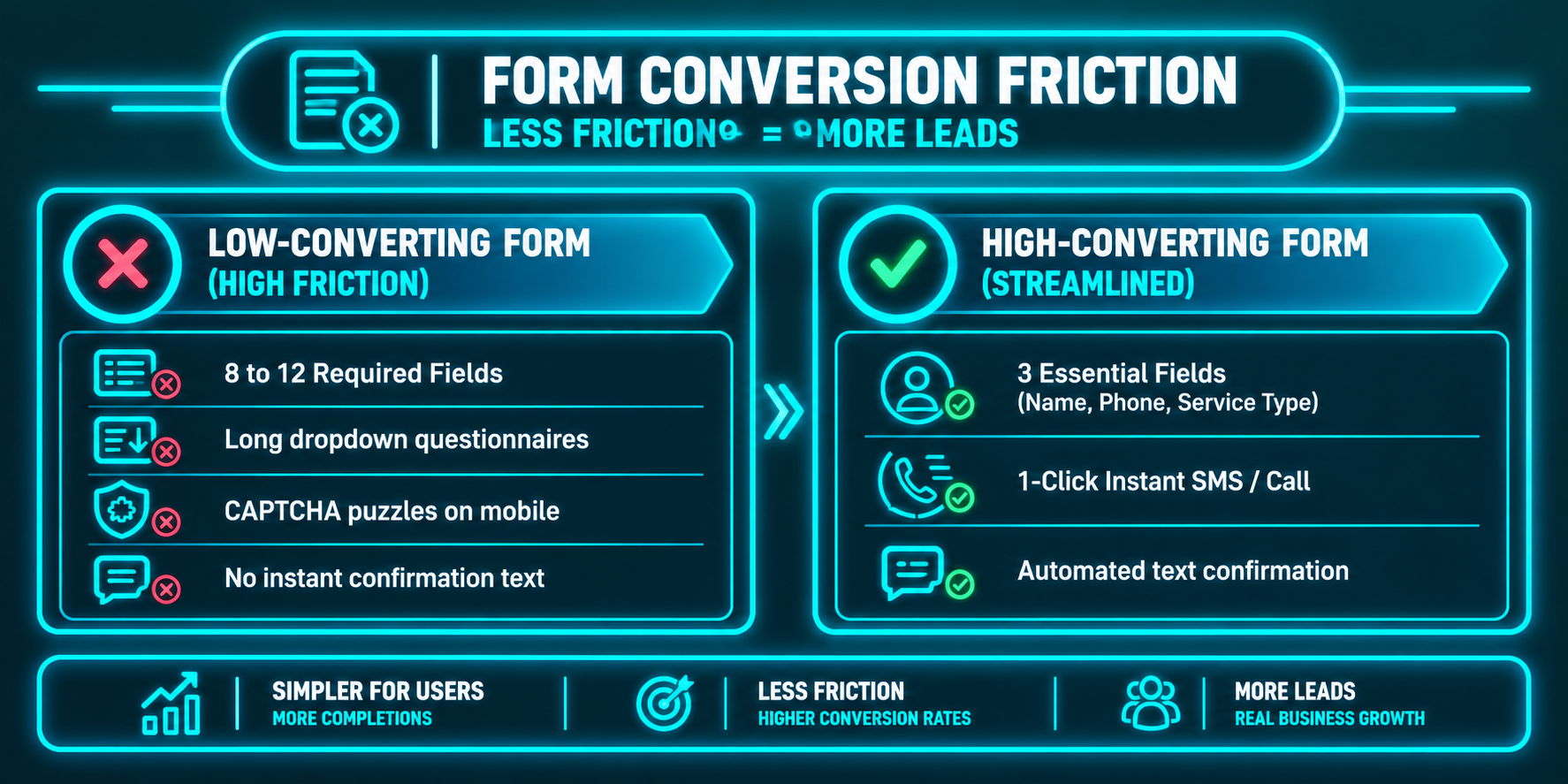
Sign 4: Generic Stock Photos Instead of Real Team & Project Proof
Modern consumers are wary of fake contractors and lead-generation brokers. When your website displays obvious stock photos of actors in pristine lab coats or sanitized hard hats, visitors sense a lack of authenticity.
Authentic proof converts. Replacing generic stock imagery with real photographs of your branded service vans, technicians in uniform, organized shop bays, and actual before-and-after project photos builds immediate consumer trust. Real imagery signals that you are an established, licensed, and physically present local business.
Sign 5: Missing Hyper-Local Context and Service Area Pages
If your business serves a 25-mile radius covering four different suburbs or neighboring towns, a single generic homepage is insufficient. If a customer in Plano lands on a site that only mentions Dallas, they often leave, assuming you won’t travel to their neighborhood.
A well-architected website uses dedicated Location Landing Pages for each key municipality or service area. Each page should feature localized Schema markup, customer testimonials from that specific area, and unique details regarding response times in those neighborhoods.
Sign 6: An Outdated Look That Signals You’re Out of Business
Web design trends and consumer expectations evolve. If your website looks like it was built in 2014—featuring non-responsive mobile layouts, broken links, outdated copyright footers, or non-functional navigation menus—visitors subconsciously wonder whether your business is still operational.
A clean, modern, and accessible website layout communicates operational excellence. If your digital storefront appears neglected, potential clients will assume your craftsmanship or service delivery might be equally careless.
Sign 7: Absence of Direct Answers, Transparent Pricing, and FAQs
Modern consumers dislike having to call just to find basic baseline pricing or scheduling terms. While custom service jobs naturally require detailed diagnostics, websites that provide transparent starting price ranges, warranty explanations, and clear FAQs keep visitors engaged far longer.
Addressing common questions directly on your service pages also provides structured data that conversational AI engines like ChatGPT, Gemini, and SearchGPT can extract and recommend.
💡 Is Your Website Silently Losing You High-Paying Jobs?
Stop wondering why your web traffic isn’t turning into phone calls. Let our conversion optimization specialists run a Comprehensive 15-Point UX & Conversion Audit on your site.
The Strategic Redesign Framework for Lead Generation
A website redesign for lead generation is not just about choosing new color palettes or modern fonts. It is about engineering a clear, frictionless pathway that leads a visitor directly toward booking a service call.
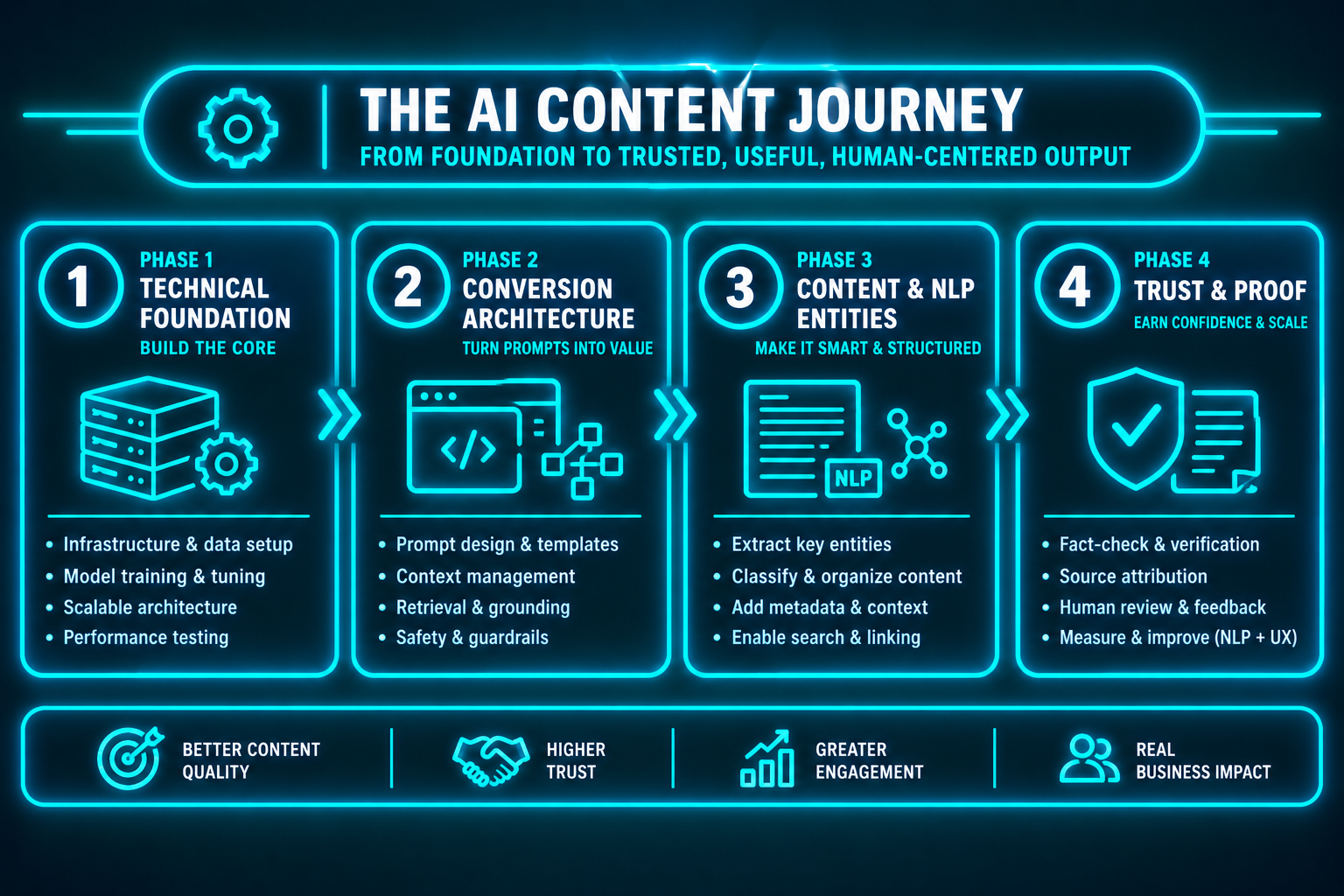
Phase 1: Establish a Fast, Mobile-First Technical Foundation
- Sub-2-Second Mobile Load Times: Compress all images using modern WebP formats, eliminate bloated third-party scripts, and deploy high-performance cloud hosting with content delivery networks (CDNs).
- Click-to-Call Sticky Navigation: Implement a fixed header or bottom navigation bar on mobile devices featuring a prominent, high-contrast “Call Now” button and an easy “Book Online” shortcut.
- Core Web Vitals Compliance: Ensure page elements don’t shift during loading (zero Cumulative Layout Shift) and interactive elements respond instantly upon touch.
Phase 2: Build a High-Converting Page Architecture
Structure your service pages using proven visual hierarchies designed for quick scanning:
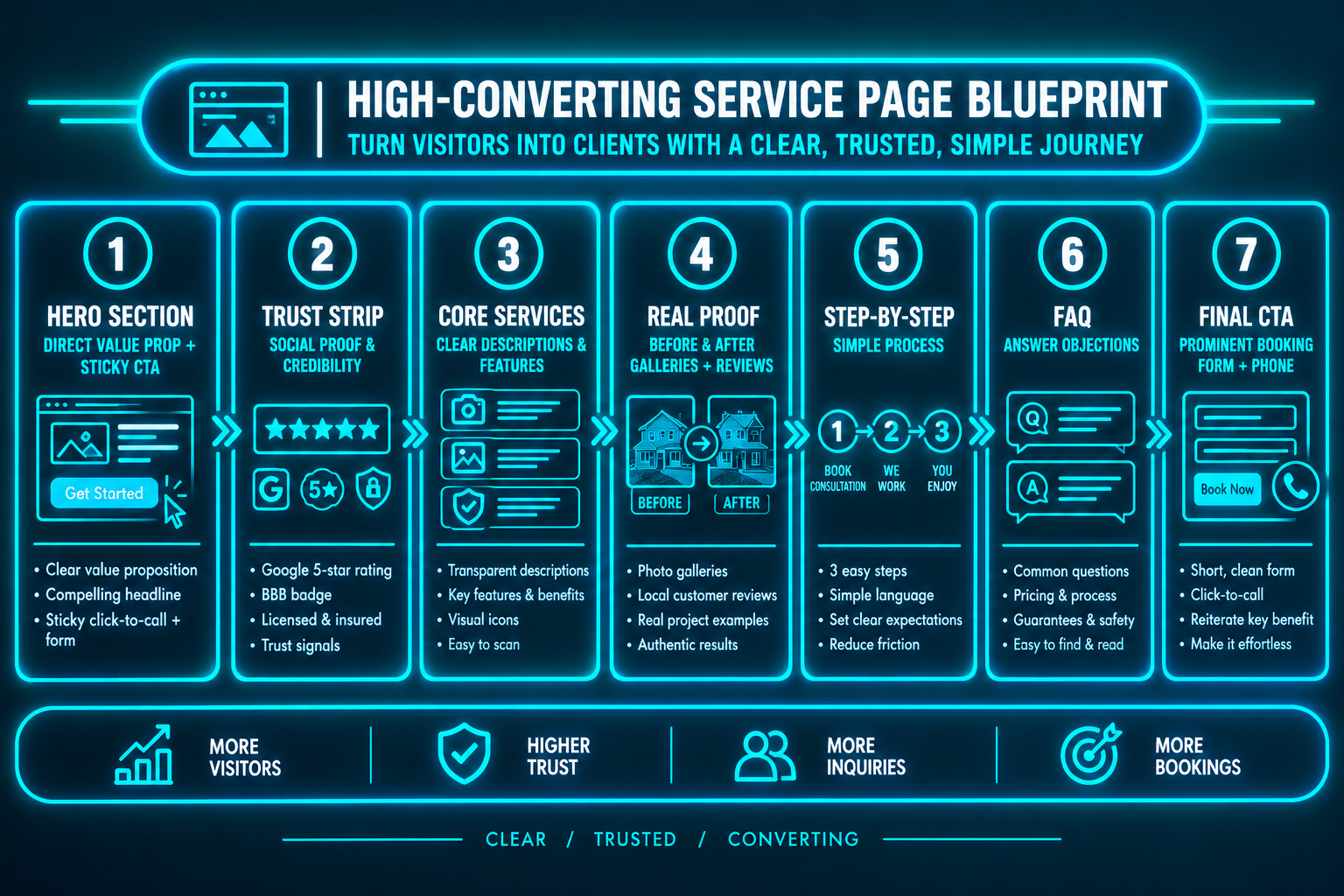
- The Hero Section: Clear statement of service, geographical territory, primary benefit, and an embedded 3-field contact form above the fold.
- The Trust Strip: Immediately beneath the hero section, display recognizable trust badges: Google 5-Star badge with total review count, Better Business Bureau accreditation, trade certifications (e.g., ASE for auto repair, NATE for HVAC), and “Fully Licensed & Insured” guarantees.
- The 3-Step Process: Demystify your service process with a clean breakdown:
- Step 1: Call or Book Online.
- Step 2: On-Site Inspection & Upfront Quote.
- Step 3: Quality Guaranteed Repair & Service.
Phase 3: Optimize for NLP Entities and Modern Search Engines
Integrate rich contextual entities directly into your website’s content and underlying code:
- Nested JSON-LD Schema: Deploy
LocalBusiness,Service, andFAQPageSchema markup to clearly define your offerings for search engines. - Semantic Headings ($H1$, $H2$, $H3$): Format section headings as conversational questions and service categories rather than vague phrases.
- Direct-Answer Content Blocks: Provide 30-word summary answers below each service heading to capture voice search and AI search overviews.
Phase 4: Deploy Social Proof and Video Testimonials
- Geotagged Real Project Galleries: Showcase real project photos labeled with the specific city and service performed (e.g., “Brake rotor resurfacing completed in Round Rock” or “Ductless AC installation in Austin”).
- Video Testimonials: A brief 30-second smartphone video of a real homeowner or customer praising your service builds credibility far more effectively than anonymous text quotes.
Measuring Website ROI: Key Performance Indicators (KPIs)
Once your redesigned website goes live, monitor these conversion-focused metrics rather than relying solely on surface-level traffic numbers:
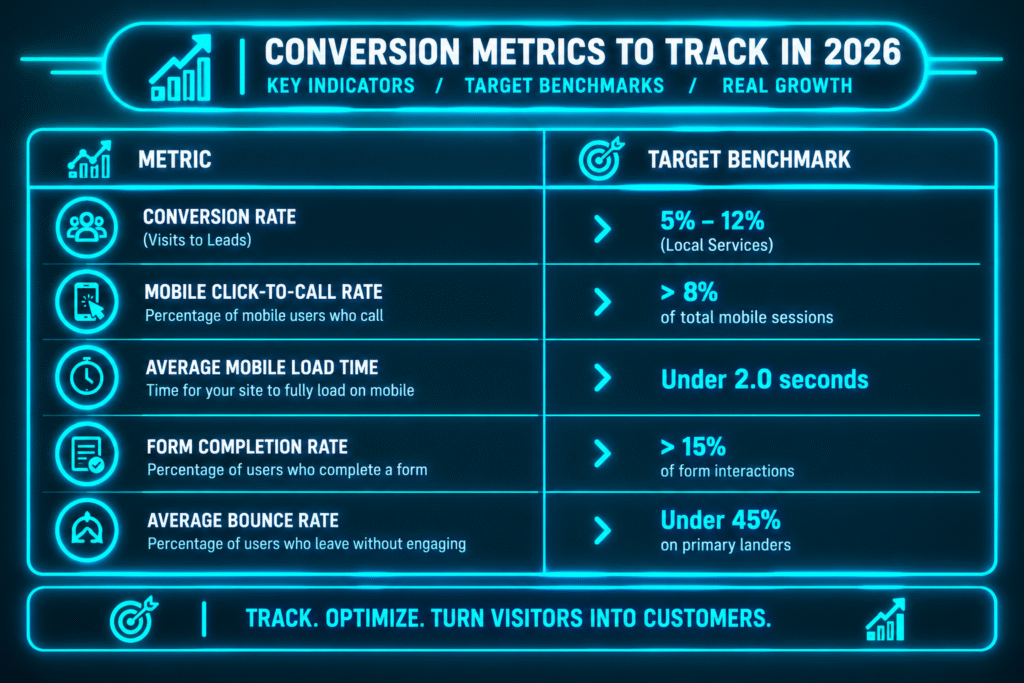
When your conversion rate improves from 2% to 6%, you triple your inbound leads and booked revenue from the exact same volume of web traffic effectively cutting your customer acquisition cost by two-thirds without spending an extra dollar on advertising.
📊 Want to See What a High-Converting Site Can Do?
Don’t let an outdated, slow website hold your business back. Let our specialized web design team build a fast, conversion-focused website tailored to your local market.
How CodixMedia Transforms Websites into Lead Engines
At CodixMedia, we don’t build generic brochure websites. We design and build high-converting digital growth platforms engineered specifically for USA local service providers, contractors, automotive repair and detailing facilities, and home service specialists.
Our end-to-end web development solutions include:
- Conversion-First Web Development: High-speed, mobile-responsive Website Development Services built for maximum call volume and form conversions.
- Advanced Technical & Schema SEO: Machine-readable JSON-LD Schema graphs integrated directly into your site to win traditional rankings and AI search citations.
- Google Business Profile Synergy: Seamless alignment with our Google Business Profile Management Services to maximize Map Pack conversions.
- Paid Media Integration: Dedicated, high-converting landing pages built to maximize ROI from your PPC Campaigns.
Ready to Turn Your Website into Your #1 Lead Source?
Stop losing high-value local clients to competitors with better, faster websites. Partner with a team that knows how to build clean, modern, high-converting platforms that keep your technicians busy.
👉 Schedule Your Free Website UX Audit & Consultation Today or review our real-world design work on the CodixMedia Portfolio.