Search behavior has officially shifted. For nearly three decades, local business marketing meant one primary thing: ranking on Google’s traditional blue links and local map packs.
However, in 2026, millions of homeowners, vehicle owners, and commercial property managers no longer type simple keywords into traditional search bars. Instead, they turn to Conversational AI engines such as ChatGPT, Perplexity AI, Google Gemini, and Claude asking complex, multi-layered questions:
“Who is the most reliable HVAC contractor in Dallas that offers same-day emergency heat pump repair and transparent pricing?”
“Compare the top three auto detailing shops in Miami for ceramic coating based on recent customer sentiment and warranty terms.”
When a potential client asks an AI engine for a recommendation, the AI does not return ten blue links or a page of sponsored ads. It returns a single, direct, highly persuasive answer that explicitly recommends one or two specific local businesses while summarizing why they are the best choice.
If your business isn’t cited inside these AI-generated recommendations, you are invisible to a rapidly growing market segment of modern consumers.
This guide breaks down Generative Engine Optimization (GEO)—the modern evolution of SEO—and provides a clear roadmap to ensure your local service company is recommended by ChatGPT, Perplexity, and Gemini.
What is Generative Engine Optimization (GEO)?
Generative Engine Optimization (GEO) is the practice of structuring, optimizing, and distributing your brand’s digital footprint so that Large Language Models (LLMs) and generative search engines select your business as the definitive, trusted answer for user queries.
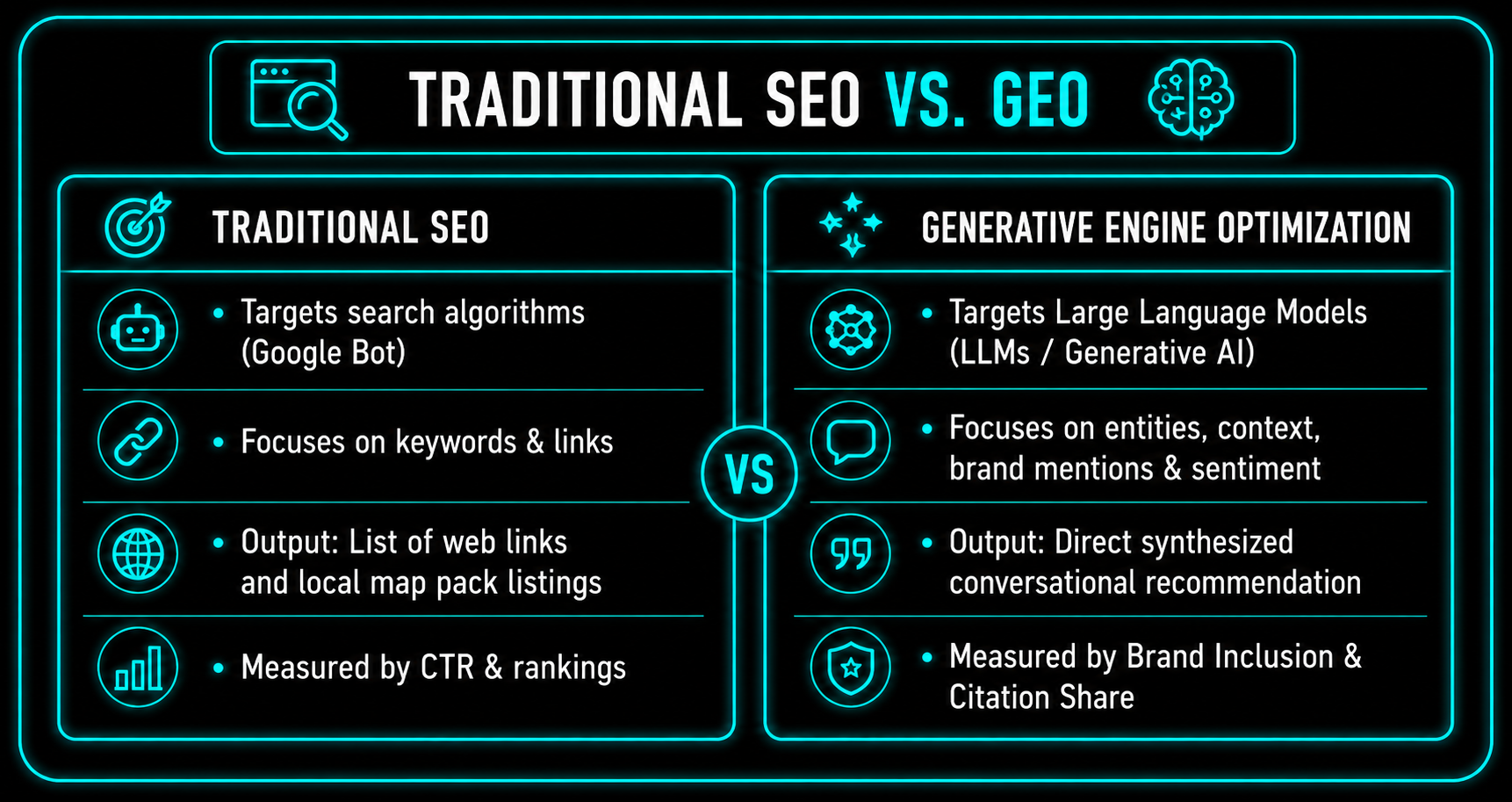
While traditional Search Engine Optimization (SEO) focuses on matching specific keywords to rank web pages on traditional Search Engine Results Pages (SERPs), GEO focuses on Entity Authority and Cross-Platform Knowledge Graph Alignment.
AI engines crawl websites, third-party review platforms, industry directories, and digital press to build a holistic understanding of real-world businesses. GEO ensures that when an AI model synthesizes information about your industry and city, your brand emerges as the undisputed local authority.
How AI Search Engines (ChatGPT, Perplexity & Gemini) Pick Winners
To rank within AI-generated responses, you must understand how generative engines retrieve and synthesize real-time data using Retrieval-Augmented Generation (RAG).
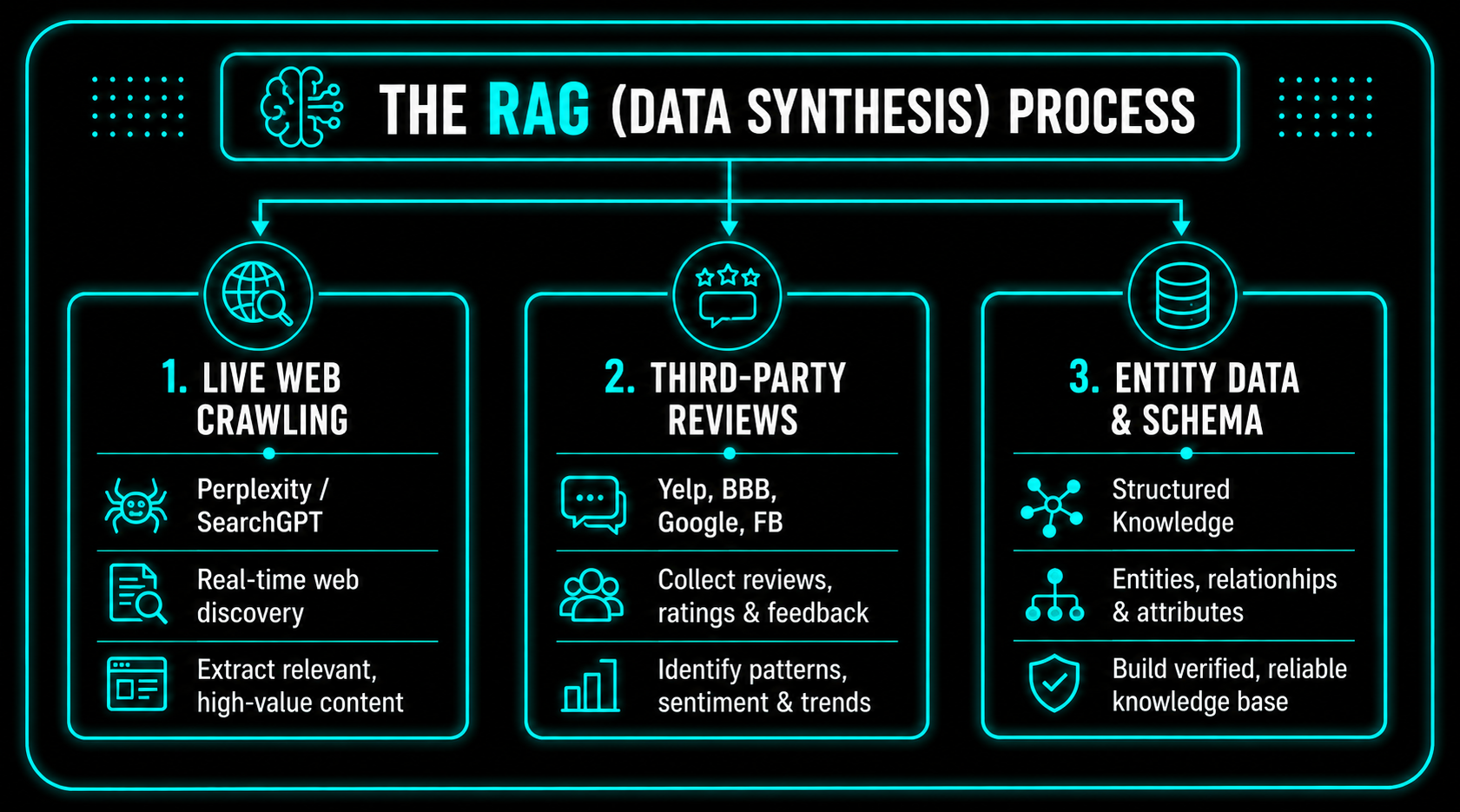
When a user asks Perplexity or ChatGPT for a local service recommendation, the AI engine executes a three-stage retrieval process:
- Live Web Retrieval: The AI scans active search indexes (such as Bing API or Google Search API) for real-time local results matching the prompt’s intent.
- Sentiment & Unstructured Data Analysis: The AI parses unstructured text across third-party review sites, local news outlets, Reddit discussions, and forum threads to evaluate customer satisfaction and brand reputation.
- Entity Verification & Citation Selection: The AI cross-references the business’s NAP (Name, Address, Phone Number), pricing transparency, structured Schema data, and service specs to generate a confident recommendation complete with source citations.
If your business lacks consistent third-party mentions, detailed structured data, or clear brand sentiment, the AI model passes over your profile in favor of a competitor with a stronger digital footprint.
💡 Is Your Brand Recommended by AI Search Engines?
ChatGPT and Perplexity are already guiding customers in your city. Find out if AI engines recommend your business or send your clients to competitors.
5 Core Pillars of Generative Engine Optimization (GEO)
To optimize your local business for generative search platforms, implement these five foundational pillars:
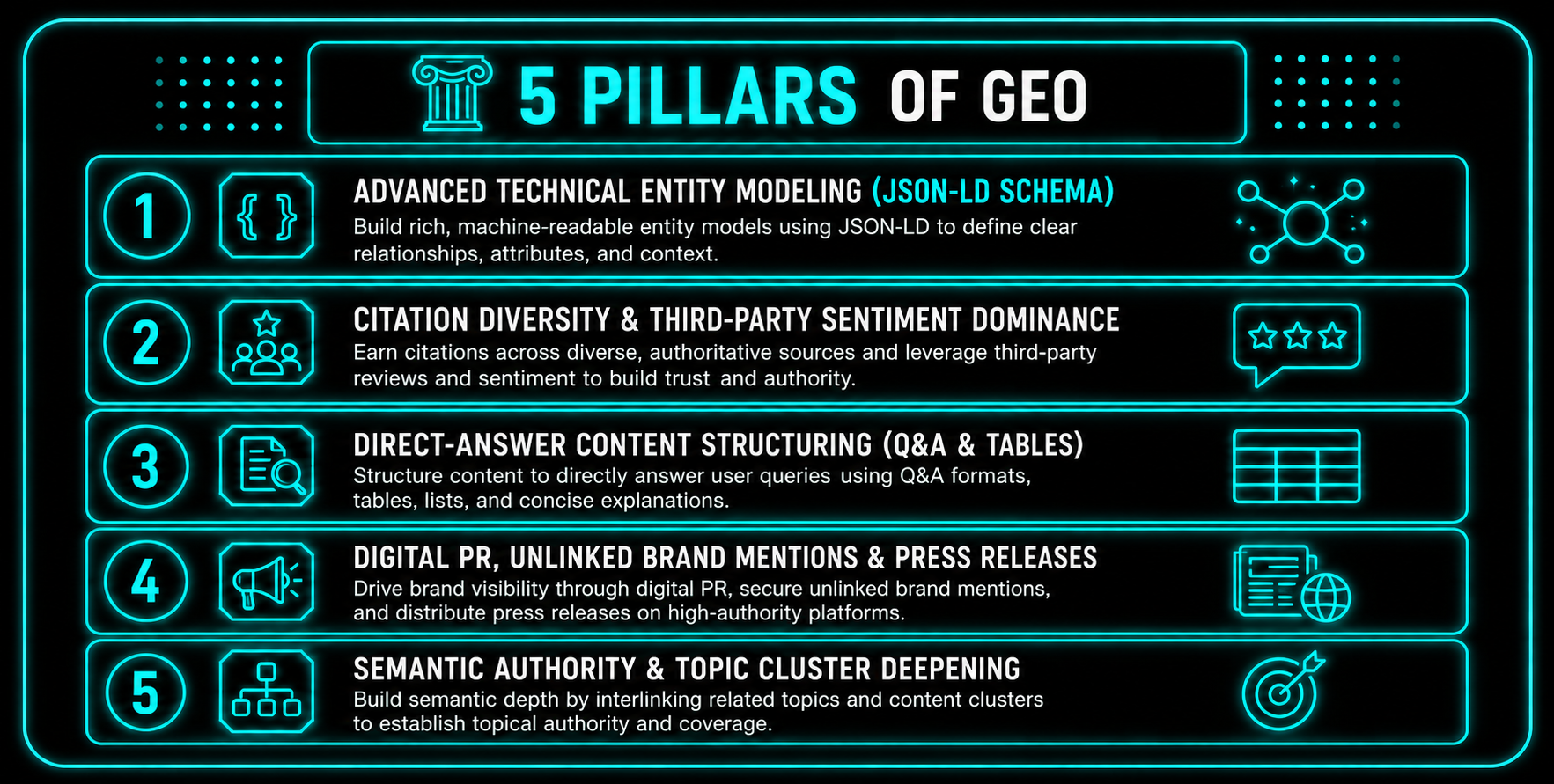
1. Advanced Technical Entity Modeling (JSON-LD Schema)
AI engines rely heavily on structured code to understand what your business actually does. Plain HTML text can be ambiguous, but nested JSON-LD Schema Markup provides explicit, machine-readable facts.
Your website must deploy deeply detailed Schema structures incorporating:
@type: Specific local business types (PlumbingService,HVACBusiness,AutoRepair,Electrician).knowsAbout: Specific technical topics (e.g., “Heat Pump Installation”, “Ceramic Coating Application”, “Tankless Water Heater Repair”).areaServed: Specific geographic regions, city coordinates, and zip codes.hasOfferCatalog: Itemized lists of services with explicit price points and terms.
2. Citation Diversity and Third-Party Sentiment Dominance
Traditional SEO over-indexed on Google Business Profiles alone. Generative AI models, however, pull from broad web indexes. Perplexity and ChatGPT frequently cite sources like:
- Yelp & BBB (Better Business Bureau): Verified rating metrics.
- Apple Maps & Bing Places: Secondary location indexes.
- Industry-Specific Portals: Angi, HomeAdvisor, Carfax, or regional trade registries.
- Reddit & Local Forums: Unfiltered customer discussions and community recommendations.
A business with 500 Google reviews but zero presence on Yelp, Reddit, or industry directories will struggle to gain high confidence scores inside LLM outputs.
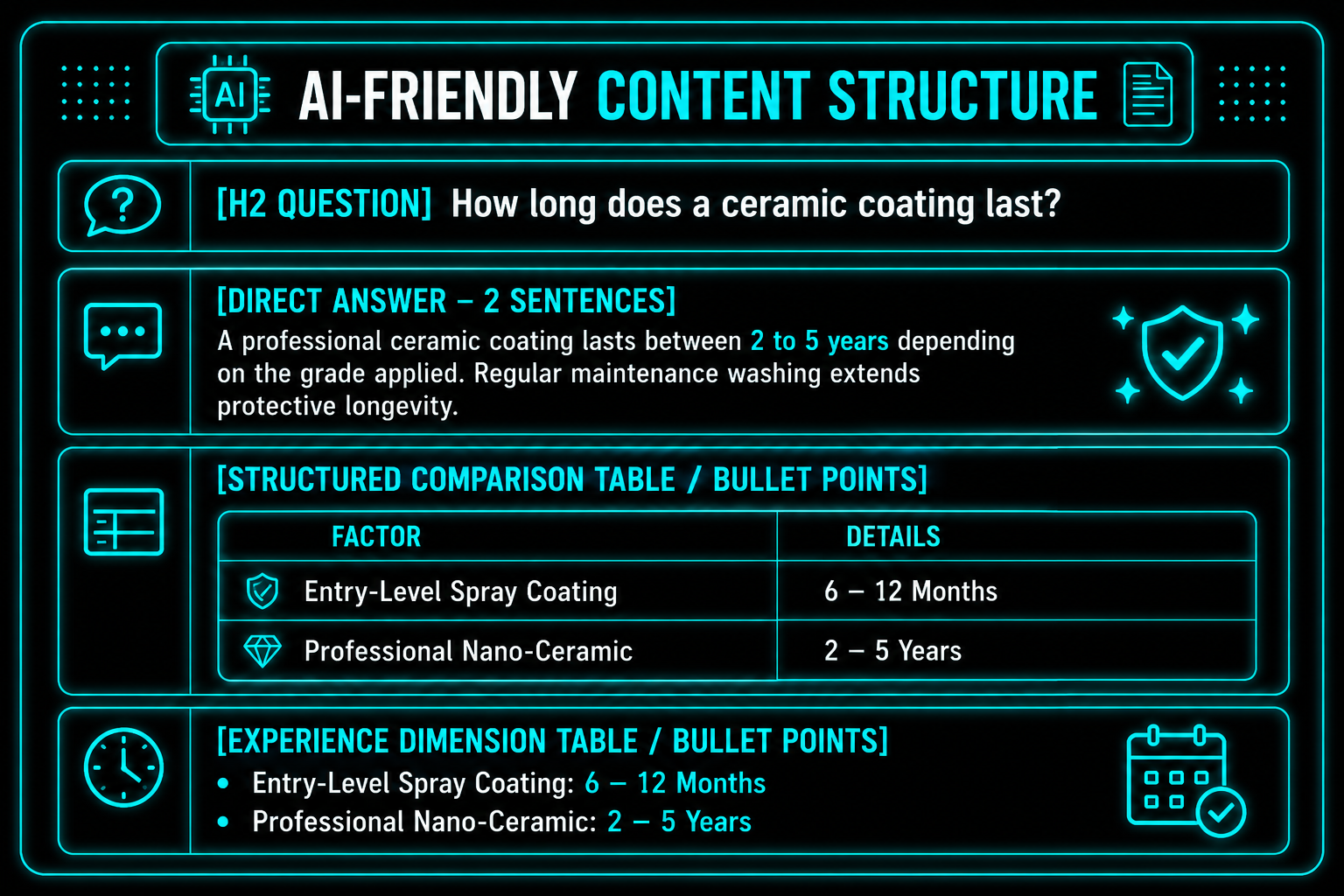
3. Direct-Answer Content Structuring (The Q&A Format)
AI models prefer concise, authoritative data blocks that can be easily extracted and reformatted into natural language responses.
To make your website content “AI-extractable”:
- Use clear, conversational $H2$ and $H3$ headings framed as exact questions (e.g., “How much does emergency plumbing cost in Austin TX?”).
- Provide a direct, 2 to 3 sentence answer immediately below the heading before expanding into details.
- Utilize Markdown Tables and Bullet Points to present comparative data, pricing tiers, and process steps.
4. Digital PR, Unlinked Brand Mentions & Press
Generative AI models measure brand authority by analyzing how often your business name is cited across the web even without an active hyperlink.
Local press releases, news features, podcast appearances, community event sponsorships, and local blog mentions train LLMs to recognize your business as an established local brand.
5. Semantic Authority and Topic Clusters
Publishing surface-level, 500-word articles no longer builds search authority. AI models evaluate Topical Completeness. If your website covers a topic like “HVAC Maintenance”, you must address all related sub-entities: seasonal filter changes, ductless mini-split troubleshooting, refrigerant leak detection, and local energy efficiency rebates.
Actionable GEO Execution Plan for Local Service Providers
Follow this step-by-step roadmap to optimize your plumbing, HVAC, auto repair, detailing, or electrical business for ChatGPT and Perplexity:
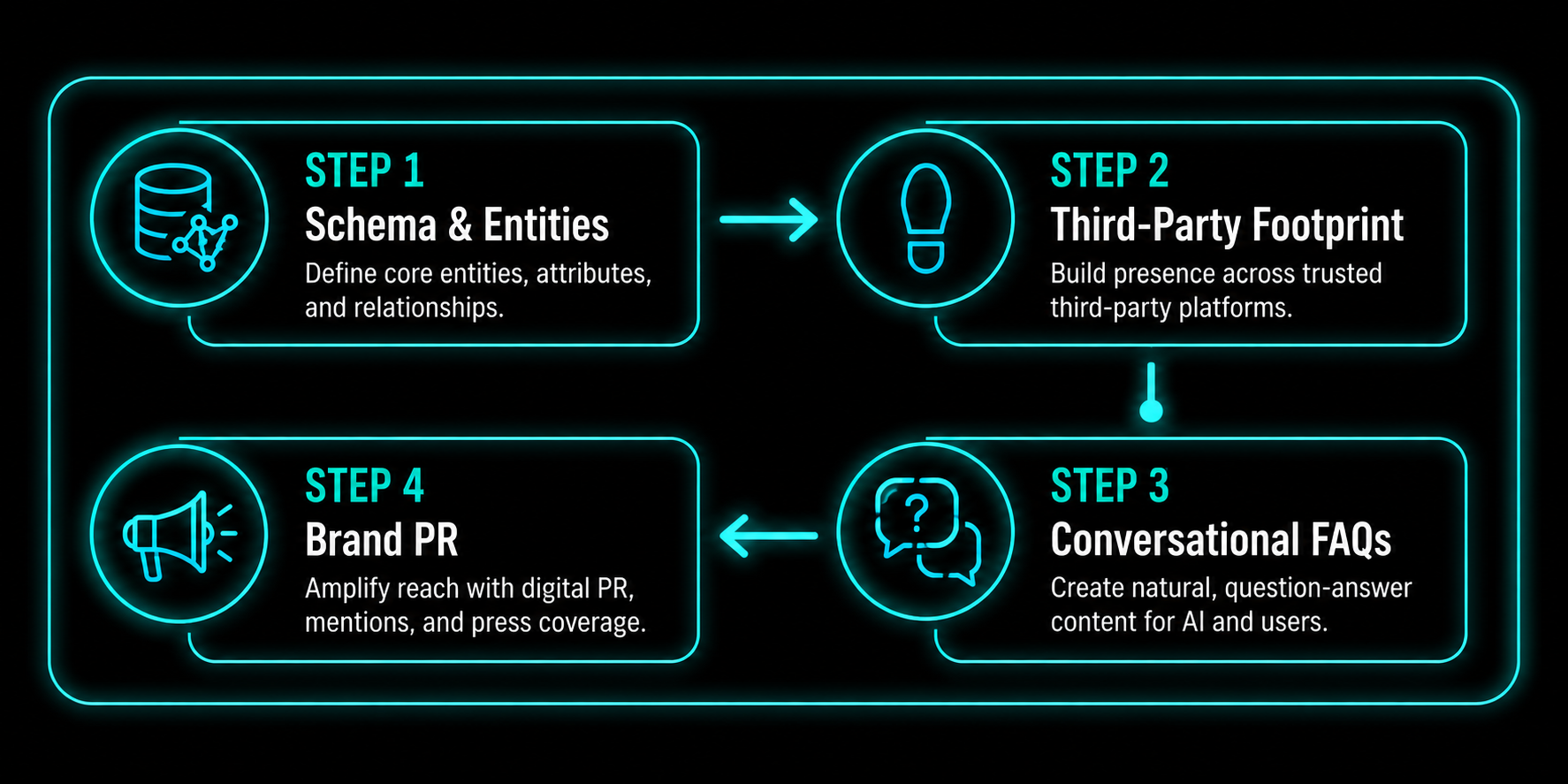
Step 1: Implement Comprehensive Schema Markup
Add advanced LocalBusiness JSON-LD code to your homepage and main service pages. Explicitly define your service areas, parent organization, social media profiles (sameAs), and exact service offerings.
Step 2: Build an Omnichannel Review & Profile Footprint
Expand your review generation beyond Google:
- Activate and optimize your business listings on Yelp, Bing Places, Apple Maps, and Nextdoor.
- Set up an automated review management system to gather feedback across multiple platforms.
- Encourage satisfied customers to mention specific service types and city names in their reviews.
Step 3: Add Conversational “AI-Ready” FAQ Sections
Add structured FAQ modules to every core service page on your website. Use conversational phrasing that mirrors how people speak to voice assistants and AI tools:
- “What should I do if my AC stops blowing cold air at night?”
- “Is ceramic coating worth the cost for a new truck?”
- “How quickly can an emergency electrician arrive in [City]?”
Step 4: Monitor Your AI Brand Visibility
Test your local visibility monthly across ChatGPT, Perplexity, and Google Gemini using prompts like:
“What are the top 3 rated [service type] companies in [City Name], and why?”
Analyze the output. If your competitors are recommended instead of your business, inspect the citations provided by the AI to see which directories, news sites, or review platforms sourced the answer. Then, acquire a presence on those platforms.
📊 Don’t Get Left Behind by the AI Search Shift
Generative AI is reshaping how consumers find local contractors and auto specialists. Let our performance marketing team optimize your digital footprint for both traditional search and conversational AI engines.
How CodixMedia Drives Local AI Search Dominance
At CodixMedia, we stay ahead of digital search trends so our clients don’t get left behind. We help local service businesses, contractors, and automotive specialists across the USA dominate both traditional Google Maps and modern AI search engines.
Our comprehensive growth solutions include:
- Generative Engine Optimization (GEO): Advanced entity building, Schema architecture, and cross-platform brand positioning for ChatGPT, Perplexity, and Gemini.
- Google Business Profile Mastery: Complete Google Business Profile Management to maintain Top 3 Map Pack rankings.
- High-Converting Web Development: Custom Website Development Services built with structured data and high-speed performance.
- Paid Media & Search Ads: High-ROI PPC Campaign Management to capture immediate customer demand across all channels.
Ready to Be the #1 AI-Recommended Business in Your City?
Stop letting competitors claim the future of search. Partner with an agency that understands how to position your brand for long-term dominance across Google, ChatGPT, and beyond.
👉 Schedule Your Strategy Call with CodixMedia Today or explore our proven track record on the CodixMedia Portfolio.